What I read last year, 2012

Some years I don’t get a chance to read as much as others. This year was spent more on recovering from a physical and mental challenge, and so I did not read as much. Nevertheless, I see that somehow I did get plenty read this year. Forgive me if I don’t recall a lot about the books…this fibromyalgia fog is pretty real. 🙂

Harry Potter, the entire series by JK Rowling. This is my third read-through. I needed something lighter and more familiar, less challenging. This is a beautifully written series of books, deeply satisfying. Its message of friendship, of good over evil, of love and perseverance, is classic. I will read it again and again.

The Lord of the Rings, the three volumes by JRR Tolkien. I hadn’t read this series since high school. I won’t tell you how long ago that was, but it was high time I read it again. Its depth and beauty is awe-inspiring and timeless. Now I am watching the movies again. What joy!

The Sherlock Holmes series of short stories by Sir Arthur Conan Doyle. Reading these stories is spilling over into this current year. I have never read these stories–a real shortcoming in my classic reading list.

Crocodile on the Sandbank by Elizabeth Peters. This is a mystery, a funny story told by a wealthy, arrogant British woman who loves archaeology. Peters has many, many such mysteries in her repertoire. I tried the next in the series and got bored with it. Crocodile was fun, though.

Ender’s Game by Orson Scott Card. I picked this up because my son, the sci-fi geek and English teacher, told me it was fantastic and that there will soon be a movie of this one. It was pretty fantastic–doggone-it–I have to admit that to my son. Ender is a little boy brought to a training station to learn to fight the invaders from another world.

Forgotten Garden by Kate Morton. This is the mystery of a little girl who turns up in Australia at the turn of the century, and of her granddaughter, who goes on a quest to find out the answers. Well-written and finished nicely.

The Help by Kathryn Stockett. I finally gave in to the pressure from all sides and read this one, just in time to see the film once it was released on DVD. This was a great read!

I am Half-Sick of Shadows by Alan Bradley. This is part of the Flavia de Luce series that begins with Sweetness at the Bottom of the Pie. This 11-year-old girl in post-WWII Britain solves mysteries with her uncanny wisdom and love of chemistry. Humorous and entertaining, I found each book delightful. The next one comes out at the end of January.

Insurgent (Divergent) by Veronica Roth. Part two of a trilogy, this is a dystopian novel along the lines of the Hunger Games series, only (I think) better. Her next highly-anticipated novel comes out later this spring.

Middlemarch by George Eliot. Eliot tells a long story of different characters involved in relationships–some in loveless marriages or in badly matched marriages. I almost gave up a couple of times on this one but persisted because a friend was also reading it, and who wants to be beat in a reading contest? Really, this one went on a bit long but ended better than it began.

The Name of the Wind by Patrick Rothfuss. A sweeping epic novel along the lines of The Lord of the Rings. This one is magical, fantastical, scary, and lovely altogether. I loved it and can’t wait to read the next one of his books.

Out of the Silent Planet by CS Lewis. I was underwhelmed by this one, unfortunately. Somehow in my fog I just didn’t get it–whatever “it” is. Sorry, Lewis fans! Maybe I need to try the next books in this series in order to get it. Maybe not.

What’s up for this year? I will keep reading the Sherlock Holmes short stories; I have a lot more to go. There are some sequels on this list that I’d like to pick up. That’s easy to remember, in my fog; all I have to do is read my blog again. 🙂

2 Comments

Filed under Literature

Looking to myself for healing

Not to be overly dramatic, but pain has been my companion for most of my adult life. It has gotten immeasurably worse in the past year, and finally I have a diagnosis of fibromyalgia and chronic fatigue. The name doesn’t do much to improve my healing, but at least I know it’s nothing else, and I can focus on how to live with what the doctors call a “neuro-muscular” disorder.

The pain, on a scale of 0-10 where 10 is unspeakable, knock-you-unconscious, reached an 8 at times. The mind can only take so much pain before it becomes confused, trying to cope with so much input. I couldn’t think straight much of the time, lost my words and my concentration, could not read or finish sentences when talking.

And I became depressed. My mind began wandering into unhealthy and unhelpful patterns of thinking. Friends and family had to remind me that I was ill, that this was not my fault, that it was going to get better. I couldn’t think past the pain or the idea that somehow I had brought this on myself.

Some of my unhealthy thought processes cycled around on the theme of “gotta pull myself up by my boot straps and make myself—force myself—to get well again.” That was futile thinking, and perhaps even damaging thinking, to imagine that I had brought this on, and I alone could make this go away.

Suffering from pain on and off for much of my adult life, I had been under the impression that I could bring myself out of this pain, if only. If only I prayed differently. If only I could find the unconfessed sin in my life and repent of it. If only I had a closer relationship with God. Those, I learned, are lies designed to keep me imprisoned in my own feelings of guilt and inadequacy—looking to myself for my healing.

Yet these were some of the things good church-going people were telling me, and those thoughts stem from prosperity gospel preaching. “Name it and claim it” preaching teaches that if you pray the right prayer and believe that you were meant to receive all the good things God has stored up for you on earth, you will get all those things NOW. I may be oversimplifying, but this is the teaching of many popular preachers (Joel Osteen, Joyce Meyer, TD Jakes) these days, and it has crept into the evangelical church.

In that way of thinking, then, I can state that I will be well, and pray the right prayers, and believe that it is true, and I will be well. If I do not get well, then, it is my fault. What a harmful, damaging lie! Yet this was ingrained in me.

My background is filled with this kind of experience. Of people quizzing me about how I am praying and what I pray for, perplexed as to my continued pain since there were so many prayers. To continue in pain, then, is obviously my fault, because I did something wrong, or didn’t do enough of the right thing, or didn’t pray the right prayer. Yes, I was even told that I wasn’t praying right!

Pastor Russell Moore talks about the heresy of the prosperity gospel, and I paraphrase here: “If you want to know whether you are following Christ, look to your life. So says the prosperity gospel. The problem is that all who preach the prosperity gospel, as well as all other human begins, will end up dead one day. Some will fall ill and suffer.” Then where is their gospel?

Is it my fault, then, when the pain comes back? This has taken me on a path to explore what I know to be true about God. He is sovereign. He does not need me to DO anything in order to receive his blessings. There is no formula to follow—only believe. I don’t need more faith. I have faith. I don’t need to pray a formula in order to gain more prosperity or more health or blessings. I don’t need the Prayer of Jabez or some other prosperity fad. I need God’s sovereignty.

The job of healing me is God’s, if he chooses. And if he does not?

Then God, being sovereign, will provide for me in every way he sees fit. In this I identify with the Apostle Paul, who found himself with a physical illness or pain. “Three times I pleaded with the Lord about this, that it should leave me. But he said to me, ‘My grace is sufficient for you, for my power is made perfect in weakness.’ Therefore I will boast all the more gladly of my weaknesses, so that the power of Christ may rest upon me. For the sake of Christ, then, I am content with weaknesses, insults, hardships, persecutions, and calamities. For when I am weak, then I am strong” (2 Corinthians 12: 8-10).The power of God is greater than my pain.

And here is the vital point: in this experience God got my full attention. This pain is teaching me much more about myself, and my faith, and my God, than I would have learned free from pain. My life may be poor in health, but it is still very rich in blessings.

So if I do not get healed in this life—if my pain continues for the rest of my life on earth—is this my fault or because of my inability to fix my condition? No: God is sovereign. He is good, rich in mercy, and has saved me not because of me, but because of him. And I know that the final healing will come, when I see my redeemer face to face.

3 Comments

Filed under Biblical Worldview, Health, Pain and suffering

Butchering Grammar 10: Pet peeves and funny mistakes

The average North American consumes more than four hundred Africans.

Wow. A friend sent that sentence to me, and I was afraid for those unfortunate Africans who get consumed.

Unfortunately, astoundingly stupid sentences like this amphiboly get printed, posted, and advertised all too often.

An amphiboly is a fallacy worded strangely so that the meaning of the sentence could get misconstrued. Here is another amphiboly: “Iraqi head searches for arms.”  Note to self: Proofread carefully, and perhaps show what you have written to someone else who might catch your stupid mistakes.

Here’s another: A farmer’s market near my house posted a sign that said “Now Hiring Ripe and Tasty Tomatoes.” I’m not sure what to think about that one.

A couple of pet peeves make their way to the top of my grammar and proofreading list. First is the misuse of the words “who” and “whom.” A book I just finished reading tried to sound very proper, I am sure, by saying “Whom is the one you suspect?” Now unless “Whom” in this case is the name of a character in the novel, the author (and her editor) is guilty of butchering grammar.

“Who” is a subjective pronoun, just like “it,” “we,” “he,” “she,” and “they.” When the pronoun becomes the subject of the clause, “who” is properly used. “Who is the one you suspect?” becomes the clear winner here, because in this case “Who” is the pronoun.

“Whom” is the objective pronoun. It receives the action; this pronoun is the object of the clause. “He is the one whom you suspect.”

I must tell you about another great pet peeve of mine: “I feel.” Too many times each day I hear a politician, a speaker, an entertainer say “I feel it is important to…” This, to me, is a sign of the degradation of our intellect. Really what you’re saying is “I think” or “I believe.” Why can’t you just say that? Possibly because the assertion of your beliefs can be offensive to another person, so you disguise what you believe by saying it is what you feel? That’s pretty wimpy.

It may not surprise you to know that my students are not allowed to tell me what they feel, unless they are describing the state of their health or emotions. If they want to assert a point in my class, they must accompany that point with the correct words: “I believe,” “I think.” Don’t tell me it’s what you feel. “I feel it is important to assert your beliefs clearly and unambiguously.” Gag.

Leave a comment

Filed under Grammar

Lies, fallacies, and other election year nonsense

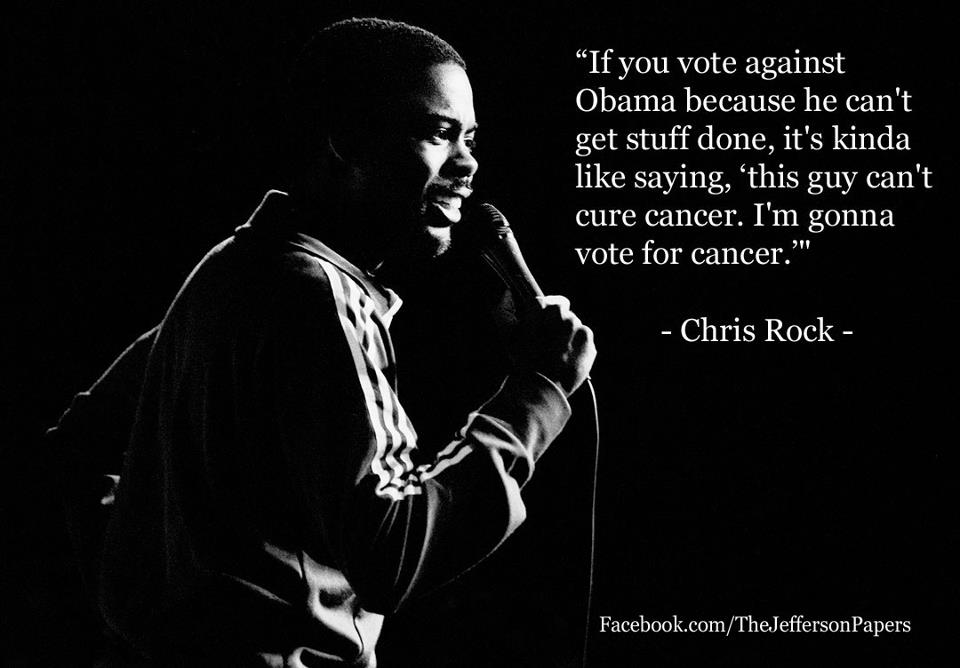
Mud-slinging is dirty businessTo catalogue all the lies being tossed around during this ugly election campaign season would be a daunting task. No one is immune; lying and exaggerations are common to all–presidential and non-presidential.

However, I will attempt to classify the crazy claims of one side against another, by simply revealing types of fallacies frequently used.

Ad Hominem. Literally, “to the man.” Remember when you were a kid and argued with a sibling or best friend? You couldn’t defend yourself against your opponent’s sharp tongue, so you got fed up and said something like, “Oh yeah? Well, you’re stupid.” Ouch. That immediately takes attention off of the argument at hand and turns into a defense of one’s intellect. Politicians who want to deflect attention from their own record will quickly resort to ad hominem attacks of their opponents. Thus the argument becomes one of character, not substance.

Ad Baculum: This one means “to the stick.” If you cannot convince someone with the truth, then use the veiled threat, or perhaps just a plain, open threat. How about the one that Democrats have trotted out time and again: If the Republicans win this election, old people will have to eat dog food in order to pay for their prescriptions; children will starve because the school lunch program will end; the water will be poisoned; the air will be unbreathable. This kind of fallacy got center stage during Clinton’s campaign against Dole.

Appeal to pity:  This one not only covers the above smear Clinton’s side perpetrated, but it goes deep to touch the heartstrings of a soft-hearted American public. This is when both sides trot out the families whose lives have been touched by the wonderful candidate for office. It happens when candidates bring out some hard-luck cases whose lives will be even worse if an opponent wins. Those sad-faced pictures of starving children and bed-ridden seniors are sure to tug at your emotions. But what have they got to do with the case at hand?

Ad populum: If you can’t get them with pity, go after your audience’s need to follow the crowd. Cite popularity polls, then conclude that if so many people want a, b, and c, then everyone else does too. Not too many people want to go against the flow, so they will certainly join the crowd. Never mind that this has nothing to do with the big issues that need addressing. Ad populum also  appeals to a common bias or prejudice, such as racism, homophobia, religious bigotry, and such. “If you don’t want to be called a bigot or racist, then you will vote for ________.” One side in this year’s presidential race accused the other side of trotting out people of color just to seem like they weren’t racists. Never mind that this side wants to have people of color give some speeches too. If this side does it, it’s not racist. If the other side does…

Straw Man: Oversimplifies an opponent’s argument before refuting it. The fallacy is committed when a person ignores his opponent’s “actual position and substitutes a distorted, exaggerated or misrepresented version of that position” (http://www.nizkor.org/features/fallacies/straw-man.html).

Bulverism: This fallacy is pretty simple. You shut down the debate by oversimplifying and judging the character of your opponent. This is a subset of ad hominem. This one says “It figures you would say that; you are a Christian” or “You Republicans are all bigots; I’m not going to listen to a word that comes out of your mouths” or “All Democrats are left-wing liberal nut-jobs.” You have dismissed the validity of an opponent by lumping him in with a broad category.

Big Lie Technique (also “Staying on Message”): “The contemporary fallacy of repeating a lie, slogan or deceptive half-truth over and over (particularly in the media) until people believe it without further proof or evidence. E.g., ‘What about the Jewish Question?’ Note that when this particular phony debate was going on there was no ‘Jewish Question,’ only a ‘Nazi Question,’ but hardly anybody in power recognized or wanted to talk about that.” Or most recently, one side accused the other of wanting to drain Medicare. That lie was repeated over and over until the other side launched a counter-offensive, accusing the first side of doing that very thing. But that lie was repeated often enough that it took on a life of its own, and many folks see it as the truth now.  (Quoted material from http://utminers.utep.edu/omwilliamson/ENGL1311/fallacies.htm)

Non sequitur:  This one means “does not follow.” Whatever conclusions a politician comes up with in his push for election, do not make sense in light of what he has said before. Take this crazy one for example:

Brilliant mind

Obviously there is much, much more wrong with this than a non-sequitur fallacy. What do you think?

1 Comment

Filed under Logical Fallacies, Rhetoric

Butchering Grammar 9: don’t let me catch you doing this

In my previous blog, I mentioned a few grammar slips that make me twitch. (I tell my students that this is all about me anyway, so do NOT make me twitch.) I thought I would give you a few more on my top Pet Peeve list of grammar and usage errors.

The word “although” is often used interchangeably with “however.” However, it should not be mistaken for replacing the “however” I just used at the beginning of this sentence. The word “although” has a couple of uses and one specific way it should NOT get used.

Correct: “I agree with your point, although I can see the other side to the argument.” Use it like however here. It does not need to be surrounded with commas; just the one comma in front, because it is a conjunction.

Incorrect: “Although, I never do agree with you when we argue.” Here it cannot be used as you would the word “however.”

Correct: “Although you and I never agree, I still love you.” Here the conjunction needs a comma after the phrase in which it is used, because you are connecting a dependent and independent clause.

So while “however” can be used to replace “although,” the word “although” cannot be used completely interchangeably with “however.

“Build off of.” Twitching begins here. I do not build an argument OFF of something else; I build an argument ON something else. I’m not sure how this became misused, but I see it more often lately. Think of this as a building problem. I cannot build a bridge off of a foundation; I must build it on a foundation so that it is firmly rooted to the spot.

Affect and Effect. One is a verb, and the other is a subject. “Affect” is the verb: “How did that affect your plans?” “Effect” is the noun: “What effect did that have on your plans?” Very, very rarely is “effect” used as a transitive verb, and in that case it means “to make happen or to bring about.” “I had hoped to effect a change in your writing by introducing these twitchy grammar problems.”

Leave a comment

Filed under Grammar

Butchering grammar 8: Back to school

As school begins for most students over the next few weeks, I am reminding myself of those common errors many students make on their homework. So here are a few, not in any particular order. They all make me twitch madly.

Lead/led. Did you know that “led” is the past tense of the verb “lead”? Neither do many of your fellow students. Some of them might include the following phrase in their homework: “He felt lead to talk to the judge.” Well,  I get stumped. He felt lead? Does it mean he felt like lead, thus making it hard to walk? Or perhaps he reached out and rubbed some lead, which then inspired him to go talk to a judge (who probably should have tossed him out of court for going around feeling lead).

Him/her, he/she. I know many college professors will contradict what I say here. When referring to a generic person in their writing, students may feel led (!) to say “him/her” instead of just “him.” This caves in to that politically correct rubbish that wants to give equal treatment to men and women in all forms of communication. First, please remember that as a woman, NOT politically correct, I will never take offense at someone who uses “he” instead of “he/she.” Second, remember that the generic person about whom we write is a human, part of the human race, and “he” used in place of “he/she” suffices to cover all of humanity. So does “she,” if you must. I do, however, warn my students that when they get to university, they will have to follow the directions of their (usually politically correct) professors. But when writing for me, use one pronoun: either he or she, but not both.

Very, really. Boring, unspecific writing can cause even the most dedicated reader’s mind to wander. Don’t just tell me that the man was very mad or really mad. Tell me HOW mad; tell me how that looked or sounded. In very cold weather, tell me how cold. What does that feel like, look like? If  you really, really want to communicate degree of pain or cold or desire, then leave off the very and the really and use more descriptive words. Really.

Be-verbs–also known as the joy-killer. Once told that they cannot use more than one be-verb per paragraph, they begin longing for it, begging for it, using it more often, losing major points for it. Be-verbs (am, is, was, were, are, be, been, sometimes being) are more passive than others. Can you figure out a way to say it without using those be-verbs? “He was running for President” could change to simply “He ran for President.” Easy! 

I had a student once who had the formula figured out. He would replace every be-verb with maintain, exist as, subsist as, and a few others. Trouble was, those verbs then became his crutch, and he overused them. The poor guy was banned from using those replacement verbs for the duration of the school year, on top of only one be-verb per paragraph. He thought he might die, but he graduated and even went on to do well in college. He became an engineer, figuring out formulas for doing things easily and well. And people can understand his writing, too.

1 Comment

Filed under Grammar

Pornography for women: Equal rights gone wrong

What an age we live in. When I was growing up, the Women’s Lib movement was strong and influential. Women burned their bras (I’ve never figured out why), marched for equal rights and equal pay and recognition. Now Women’s Rights have exploded, gone too far, in many ways, straight into the gutter, without any objective moral guideline.

I entered college determined to follow that “equal rights” route, heading into a career in which I could be independent and strong and powerful. Get my “MRS degree” in college? No way. Only God got in the way, introducing me to my husband early in my freshman year.  I married after my sophomore year, and thirty years later I am certain that was the second-best thing that ever happened. (The best, of course, was God calling my name and saving me!)

The last thing I wanted was to be a mom at home. That was for mindless housewives who had nothing better to do. Or so I believed, until I held my firstborn and fell in love with mothering. But the women’s movement had taken us so far as to have us believe that mothering full-time was shameful, an abandonment of our full potential.

Women’s Lib has brought us abortion on demand, considered a “right to privacy” (except for the privacy of the unborn, some of whom happen to be girls with a potential right to privacy…).

It has ignored the plight of women in our midst, who have been taught that somehow covering up one’s entire body in submission to an oppressive religion is “empowering.” It has totally ignored the same plight of the women overseas who are beaten, whipped, have their hands lopped off, or are even killed in pursuit of the purity of the same oppressive religion.

Somehow Women’s Rights have become selective. And now that same movement of equality has reached into a shameful area, pornography, and has declared that women have the same right to access porn as men. Pornography, then, has been given equal time.

The bestselling book Fifty Shades of Grey and its sequels are nothing more than pornography for women, and the books are selling like crazy.  The books, like many bodice-rippers of romances before them, has idealized the sexual relationship, making women wish for something more or better.

Isn’t that what porn does for men as well? Idealizes women, makes them into objects of fantasy and desire rather than human beings with whom one has a meaningful, lasting, enjoyable relationship. Wow, equal rights means we can objectify men now? Way to go! What once was considered shameful is now equal opportunity, equal rights, equal shame.

On to the movies: Magic Mike is hitting the theaters with its objectified males, those men who strip for women. No need for even a story line; let’s just watch men strip. I thought that the Women’s Movement had at one time said objectification of women was wrong, but now that men have taken that stage, so to speak, everything’s equal again. Women AND men can pursue their lust, long for some representation of human perfection, become dissatisfied with what they already have, replace real relationships with something altogether different.

Great job, Women’s Movement. What once strived for equal pay for equal work and a blasting of the glass ceiling, has now placed itself in a filthy sewer.

When we have no moral guideline, this is what happens. If we wish to publicly pursue porn, or if we include the right to kill an unborn baby as part of the right to privacy, or if we look the other way when women are beaten into submission in the name of an oppressive religion, then it’s all classified under the hideous umbrella of Women’s Rights. When no moral compass is objectively showing us right from wrong, all of it becomes a Right, then, doesn’t it?

For years I have said that the National Organization for Women did not represent me. I’ve taken a totally different path than the one they paved, and I have felt “fulfilled” (a term that makes me twitch) all these many years. It’s a shame, now, that equal rights also means equal filth and the right to objectify whomever we wish.

4 Comments

Filed under Biblical Worldview

Butchering grammar 7: Funniest grammar links

After I pick on a few common grammar errors, I thought I would share a couple of funny links I have come across. That reminds me: the other day I heard someone say “acrosst,” and my brain nearly exploded. I hope my face did not betray my treacherous feelings.

I’m actually looking forward to school starting soon, because I’m guaranteed to have more fodder for grammar discussion as soon as the assignments start pouring in. (For you students or former students of mine, know that you are indeed my blog material. Thanks for the great typos!) All I can say to my students, and to you readers, is “You should’ve PROOFREAD!”

Speaking of which, one popular error is the mistaken identity that “should’ve” takes, as well as “could’ve” and “would’ve.” What do those words actually mean? They are short for “should have,” “could have,” and “would have.” The common error is to mistake the “have” for “of” and then say “could of,” as in “I could of said that right, but instead I chose wrong. I should of kept my mouth shut.”

Rookie grammar mistakes include bad signage, which I have talked about several times before. Again, proofreading would be really nice. Especially when you pay good money for a sign, as a business owner, and no one has carefully proofed the sign before it goes up. (Sign companies: hire me!)

One such mistake is the mixing up of the words then and than. Oh, they sound so similar, yet they have such different applications! The word “than” is used for comparative purposes. “I have fewer grammatical errors than he does.” “Then” is an adverb, an adjective, or a noun, depending on its use. It gets mistakenly misused in place of that comparative “than.” Often “then” is part of a sequence (“after this, then that”) and can be misused at that time. Just remember “than” is comparative.

One more beef: The word until, which often gets shortened. The word to which it gets shortened is ’til. You know, when some letters get removed and replaced by an apostrophe? In this case, those letters are “un.” Many writers will replace it with till, a word with a completely different meaning.

One of my critics likes to argue usage to defend misusage. This person will probably say this mistaken use of ’til has been so often used, that it has become acceptable. Indeed, I have a book on my bedside table by CS Lewis, Till We Have Faces, which might prove this critic correct. It still makes me cringe, Lewis or not. I would argue that several wrongs do not make a right in this case. Till is a totally different word!

Now for some very funny grammar mistakes, and the fun we can have with them.

This comic shows how someone can have a physical reaction to bad grammar. I often feel like this.

And here is a test I would like the internet to administer before allowing people to use it.

Keep those grammar peeves coming! I could of used more this week then the week before… (twitch).

2 Comments

Filed under Grammar

Butchering grammar 6: I don’t like grammar anyways

Some grammar errors make me cringe in a big way, like when I am in line at a store and hear someone say “I didn’t like them shoes.” I get furious at the teacher who let that one slide in her class, way back in third grade. But then again, maybe the teacher herself said it. That makes me think of the impact of a teacher.

Back in the 1930s, when families were leaving the hills of Arkansas and other states in droves, heading west to greener lands, my dad was a boy. Fresh from Arkansas with his parents and loads of siblings, he was a fourth-grade back-woods farmer boy in New Mexico. His teacher didn’t sound like his family at home, nor did she sound like the drawling New Mexico kids from all sorts of backgrounds.

“You talk different,” he drawled. She agreed. They struck up a friendship when he asked her to teach him how to speak better. She worked with him as much as she could, this boy who needed to be back on the farm pretty quickly.

And my dad became the first boy in his family to graduate from college–he even earned his Masters–and he never spoke like his Arkansas family again (not that he was ashamed; he just consciously spoke differently from then on). He left the farm, moved to Colorado, and eventually became a school administrator. That teacher had a lasting impact.

I am certain teachers are out there battling the poor grammar of their students, but I sure do get discouraged when I see signs with poor grammar or hear conversations in public with language not fit for public consumption. Where are the other grammar nazis out there? Am I alone in my obsession? Is the fight for good grammar over?

Anyway, this gets me to my next peeve: the word “anyways.” I hear it all the time in conversation, and I work hard to keep my right eyebrow from twitching. This week I found it in a nonfiction book, in an author’s narration. Really? It passed the editor and proofer! Let’s get it straight: “Anyways” is not a word. Never.

Here is a word around which other words are wrong: myriad. The word is not myriads. It’s singular. Nor does it get the preposition “of” alongside. Never say “Myriads of people” or “A myriad of people.” (Twitch.) Here’s the fact: Myriad means many. You will not hear people say “Many of people” or “Manies (eek!) of people.” The word does not get pluralized, nor does it get that preposition “of.” You would just say “Many people,” just as you would say “Myriad people.”

Have you encountered a teacher who has slammed you for your poor grammar, who has taught you the correct way to say something? Thank her! Chime in here: tell me what she taught you.

8 Comments

Filed under Grammar

Where has Christian theology gone?

George Santayana is credited with the famous saying, “Those who cannot remember the past are condemned to repeat it.” The lesson he teaches here is that ignoring the study of history, the lessons of history, will leave an ignorant public prone to fall prey to the same sorts of events in the future.

We can extend this argument further to Christian theology and Church history.  I believe that those professing Christians who do not study theology, including the history of Christianity, could very well fall prey to the heresies of the past. We see it today,  where Christianity is being redefined by men and women whose audiences do not discern truth from error because they do not know their theology.

In an earlier post I bemoaned the lack of Christian theology in a Christian bookstore packed full of cute little kitschy trinkets instead of the meat of Christian thinkers. There’s a reason this former bookstore has taken the word “books” out of its title. It seems more interested in selling trinkets that sell Jesus’ name than books that teach about His word.

I mentioned in that other post that I saw plenty of Christian Fiction and Christian Romance. Will readers get their theology from these books? I hope not!

We also found on the shelves plenty of Christian Living books by Joyce Meyer, Rob Bell, Brian McLaren, Rick Warren, and Joel Osteen. However, there was no Francis Schaeffer, no Spurgeon, Augustine, Grudem, Machen, Walther, Luther, Calvin, Wesley, or others. None of the great church fathers, nothing of early Christian church history lined the shelves.

Why does that matter? On the shelves of this bookstore there were NONE of the Church Fathers or the great theologians to counter the drivel coming out of the Emergent Church, which produces a swill of sewage that reinterprets Christianity according to its own sensibility and not according to the truth of Scripture. On that store’s website you can find theology if you want it, but you cannot find it walking into the store. Around the corner from this store, at Barnes and Noble, we found more Christian theology than in this Christian store! Oh, and on the website of this store you can also find a whole category called Emergent Community. Apparently the heresy sells well enough to garner its own category. So the “Christian” in  this Christian store name is actually a catch-all for whatever heresy sells.

So how will people walking into the local Christian bookstore learn theology, outside of God’s word? Apparently your only option is to study the words of the Emergent leaders to find reinvented theology, not biblical theology. There, among the swill, you will find new gnosticism; methods for hearing God’s voice according to some secret, mystical method; or perhaps a new kind of Christianity in case what you grew up with dissatisfied you. And why not reinvent it? Theology and history no longer matter when you no longer rely on the Word of God for your source of all truth.

Hebrews 5: 11-14 talks about those who just want to take the easy, I-don’t-want-to-work-too-hard-on-this-theology route, likening them to those who would prefer gumming baby food as compared to those who enjoy the work of chewing a good steak.

About this we have much to say, and it is hard to explain, since you have become dull of hearing. For though by this time you ought to be teachers, you need someone to teach you again the basic principles of the oracles of God. You need milk, not solid food, for everyone who lives on milk is unskilled in the word of righteousness, since he is a child. But solid food is for the mature, for those who have their powers of discernment trained by constant practice to distinguish good from evil.

The Emergent books tickle the ear. They are sometimes easier for the uninquisitive to digest, because the Emergent Church is geared toward the unquestioning mindset of today’s consumers. The Bible talks about this very thing, likening the watered-down versions of Christianity to baby food versus the meat of Christian theology.

A group called the Christian Research Service put out a study in 2006 about Christian bookstores. It published a scathing report about where most Christian bookstores are headed.

For a national 2006 conference of Christian retailers, “apparently, not one Training session or Workshop is devoted to:

  • teaching Christian bookstore owners, managers, and employees the importance of putting books and materials to the Biblical test, and not compromising God’s holy word under any circumstances;
  • encouraging those within the Christian bookstore industry not to compromise the faith by catering to authors and books that promote non-Christian beliefs and religions;
  • to deny authors, books, and materials that are in opposition to God’s word from entering their stores;
  • apologetics, cult-evangelism, guarding the spiritual welfare of the believer, and defending the faith;
  • witnessing to the lost, and gaining discernment through the study of God’s word;
  • placing emphasis on the salvation of the lost, sharing the gospel of Jesus Christ, repentance, Bible study, and that there is a real hell and eternal separation from God.” (http://www.christianresearchservice.com/bookstores4.htm)

This store’s display of kitsch, this paucity of the richness of the early Church Fathers and other great theologians, this embracing of the Christian romance (not too far from the Harlequin Romance) and of Emergent Church writers–this is the sign of the times, in which people will run after whatever tickles the ear instead of the meat of Christian truth.

Just at the times in history when people began to invent their own new Christianity, taking it down dangerous, heretical paths, adherents to the pure truth of Scripture stepped forward and refused to back down to those who would rather take the easier path of heresy. I am crying out to those of you who love the pure meat of the truth, to study.

Study theology; study the history of the Christian church, and you will find it out for yourself. And you will grow sad when you see the watered-down version of popular “Christianity” out there, like I have. And perhaps you too will seek out other like-minded Christians who refuse to budge on the purity of the Gospel in their church.

2 Comments

Filed under Biblical Worldview